Dock repair on Lake Norman: boards, rub rails and pilings to check
Know what to look for before dock repair on Lake Norman, from worn boards to loose rub rails and movement around pilings.
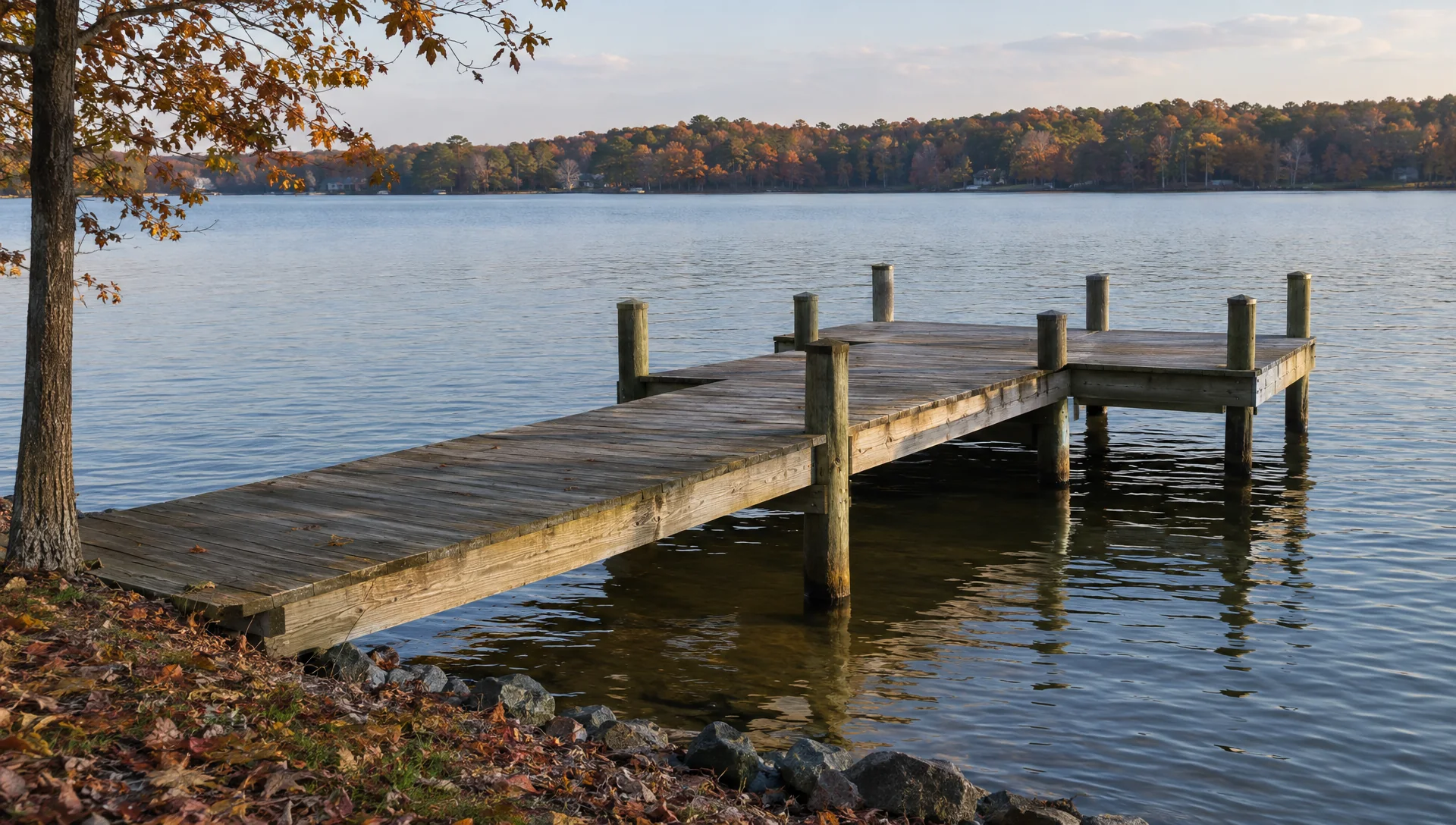
Dock repair on Lake Norman should start with the whole dock, meaning the decking, rub rails and pilings, not just the most worn board. At CTC Grading & Hauling, we repair docks for waterfront owners around Mooresville and Lake Norman. If a section feels unsteady or you can see damage, keep everyone off it until it's been checked.
Our Lake Norman dock repair service covers more than worn boards. Here's what to look at, from somewhere safe, before you call us about a repair.
Which deck-board problems should you look for?
Look for cracks, lifting edges, missing pieces and boards that sit higher or lower than the ones beside them. A weathered board isn't always the whole story, and a surface that looks fine can hide a problem underneath. What matters is what's changed and whether it affects your footing.
Tell us about loose fasteners and gaps, too. Don't walk out onto a section you're unsure of to see how much it moves. If something felt different while you were using the dock, just describe it. There's no need to do it again for a photo.
If you can, take a wide shot of the dock from shore. Close-ups show surface wear, but the wide view shows us the layout and where the problem is. Let Chris know whether it's near shore, around a slip or out toward the far edge.
What do rub rails protect?
Rub rails take the bumps from boats along the edge of the dock. When sections are missing, loose or damaged, the dock edge is exposed and boats come in against an uneven surface. They matter even when the boards you walk on still look good.
Note where the damage is and whether the rail is pulling away from the dock. If you know a boat hit it, or something else happened, tell us, but don't guess about damage you can't see. Knowing what happened and what it left behind keeps the repair conversation on track.
Don't assume a rail repair covers every other part of the edge. Ask what's being replaced, what's staying and whether anything nearby needs work. That keeps the scope of a small repair clear.
What should you look for around pilings and supports?
Pilings hold the dock up, so changes there are more than cosmetic. From somewhere safe, look for damage, anything that's out of line, or gaps at the connections that weren't there before. If something moved, tell us what moved, where and when you noticed it.
New boards can't fix a problem underneath them. If the dock has gone uneven or the supports worry you, bring it up before you pick out new decking. It's easier to plan the right repair when we know everything you've noticed.
Stay out of the water and away from damaged edges while you look. You don't need to check anything underwater before you call us. Just tell us what you can see; you don't have to prove every part is sound.
Should you repair the surface or replace the decking?
That depends on the shape the boards are in and what's holding them up. A small damaged area is a different job from wear across most of the dock. The finish you want matters, but first we need to know what can stay.
We repair existing dock surfaces and put down vinyl deck boards. If you're thinking about a different material, tell Chris how you use the dock and what bothers you about the surface you have now. Ask how much would be replaced and how it fits with the rest of the dock.
Every dock material still needs care. Boards, connections and edges that live outdoors still need an eye kept on them. What you want is the right repair for the dock you have.
What affects the plan for dock repair?
How we get there from land matters. A long set of steps, a narrow path or a steep bank changes how material gets down to the dock. Tell us about the shoreline too, especially if the spot where the dock meets land has changed or erosion is exposing soil nearby.
Keep what you know is damaged separate from the upgrades you'd like. Replacing a loose edge and redoing the whole surface are two different requests. Write it down, and you can check what we propose against the reasons you called.
CTC is a family-owned business led by Chris, serving Lake Norman, Mooresville, Huntersville, Troutman and Denver. If your dock and your shoreline problems are in the same part of the property, we can talk about both together.
Questions we hear
Does faded decking mean the dock needs a full rebuild?
Fading alone doesn't tell you what shape the dock is in. The surface, connections and supports all need a look before anyone decides on the repair.
Can new boards fix a dock that moves?
New decking on its own won't fix a problem with the supports or connections. Tell us about the movement before agreeing to surface-only work.
How do I arrange a dock repair conversation?
Call Chris at 704-902-1385 and tell us where you are and which parts worry you. Our contact page has the next step for talking about your Lake Norman dock.