
Runoff behind riprap on Lake Norman: why the yard matters
Learn how runoff behind riprap on Lake Norman can affect a shoreline repair and what to observe before discussing bank preparation or grading.
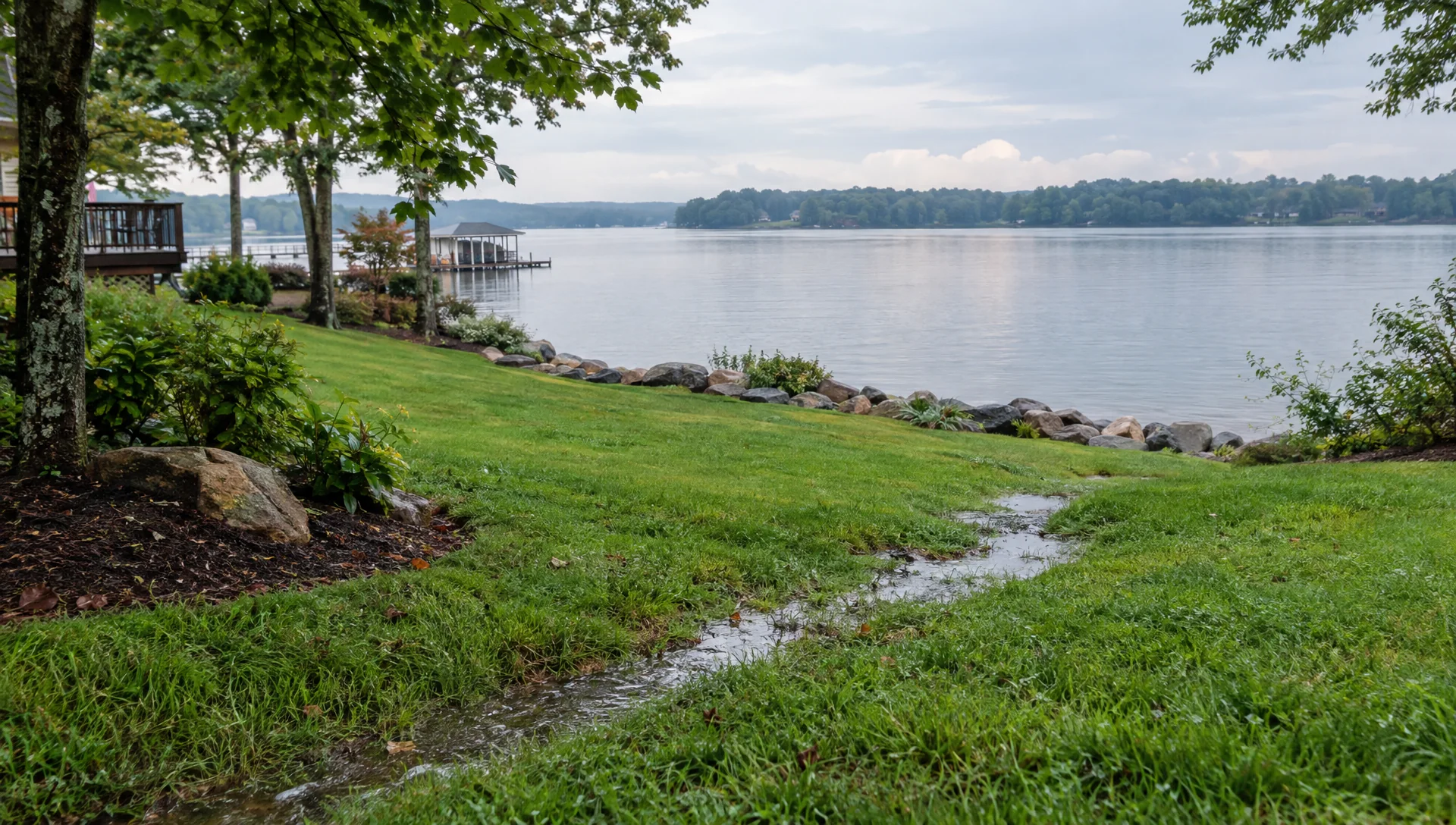
Runoff behind riprap on Lake Norman can carry soil toward the water even when stone covers the front of the bank. At CTC Grading & Hauling, we help property owners around Mooresville look at the yard and the shoreline together. If water cuts the same channel through your lawn every time it rains, tell us when we talk about the shoreline repair.
Our riprap and shoreline restoration work starts with the bank: its slope and its soil. We also do grading and hauling, which comes in when the shape of the ground is part of the problem. The first job is figuring out where the water goes.
What does runoff behind riprap look like?
You might see a narrow groove in the lawn, soil piled up behind the stone or a washed-out spot near the top of the bank. Water can also spread across a slope without cutting a deep channel. Look for patterns instead of assuming every wet spot has the same cause.
A downspout, a paved surface or a change in ground level can funnel water into one place. A yard can look normal in dry weather and act very differently in the rain. New landscaping or a new path can also change where water reaches the shoreline.
Look from firm ground once the rain has stopped. Stay away from the water's edge where soil has washed out or the ground is soft. Wide photos showing the water's route across the yard tell us more than a close-up of mud at the bottom.
Why doesn't shoreline stone solve every water problem?
Stone protects the open bank, but it doesn't stop water coming down from uphill. Water can get behind the stone or find a gap at the edge of the work. If it's carrying soil away there, the rock you can see may be only part of the repair.
Preparation matters. How soil and stone are kept apart, the shape of the bank and the support along the bottom edge all affect the finished shoreline. A fresh layer of stone on top, without knowing where the water runs, can leave a big cause of soil loss in place.
That doesn't mean every shoreline job needs its own drainage system. It means the plan should fit what actually happens on your property. A quick note about repeated runoff keeps it from being missed if we visit on a dry day.
How can you trace water without making the problem worse?
Start at the top of the yard and follow the signs downhill by eye. Note where roof water lands, where pavement ends and where the lawn changes slope. Look for a low spot that collects water before it carries on toward the lake.
Take photos from safe, steady spots and note the date. Tell us whether the water shows up after ordinary rain or only after a really heavy storm. Those details help distinguish a regular drainage pattern from an unusual event.
Don't dig a new channel to the shoreline to see what happens. Moving water around can shift erosion to a new spot or onto a neighbor's property. For now, just watch and talk it over with us before anything changes.
When should grading be discussed with shoreline work?
Grading comes up when the shape of the ground is steering the water. Low spots, sudden slopes or a route that funnels runoff toward a weak bank are worth pointing out. Then the question is what change, if any, suits your yard and what's around it.
Tell Chris what you want to keep: a path, planting bed, mature tree, steps or a level patch of lawn. Mention where equipment could get in, too. Working room affects how a change is approached and what has to happen before stone goes down.
A clear scope keeps shoreline protection separate from any work farther up the yard. Ask what each part does and how the two meet. That way you can check the plan against where the water really goes, instead of assuming one line in a proposal covers everything.
What should you tell us when you first call?
Tell us your town, roughly how long your shoreline is and where you're losing soil. Explain where the water comes from and whether you've noticed a recent change. Mention walls or docks near the problem area, because they can affect the overall plan.
CTC Grading & Hauling is a family-owned business led by Chris. We serve Lake Norman, including Mooresville, Huntersville, Troutman and Denver, with shoreline restoration, riprap, walls and related property work. You don't need a drainage design to ask us for help.
The best place to start is a plain account of what happens when it rains and what you want to protect. From there, we can sort out the damage you can see from what's causing it.
Questions we hear
Can runoff damage a bank that already has riprap?
Yes, water coming down from the yard can still carry soil toward or behind a stone edge. How the bank was prepared and where the water runs both need a look.
Should I extend a downspout directly to the lake?
Don't pick an outlet just because it's the closest low spot. Talk over the whole drainage route and how the water should be handled before you change where it goes.
Who should I call about runoff and shoreline repair?
Call Chris at 704-902-1385 to talk about your property and what you've seen. Our contact page has the next step.