
Shoreline erosion on Lake Norman: signs your bank needs attention
Learn what shoreline erosion on Lake Norman looks like, what to photograph and when to discuss riprap or bank repair with CTC Grading & Hauling.
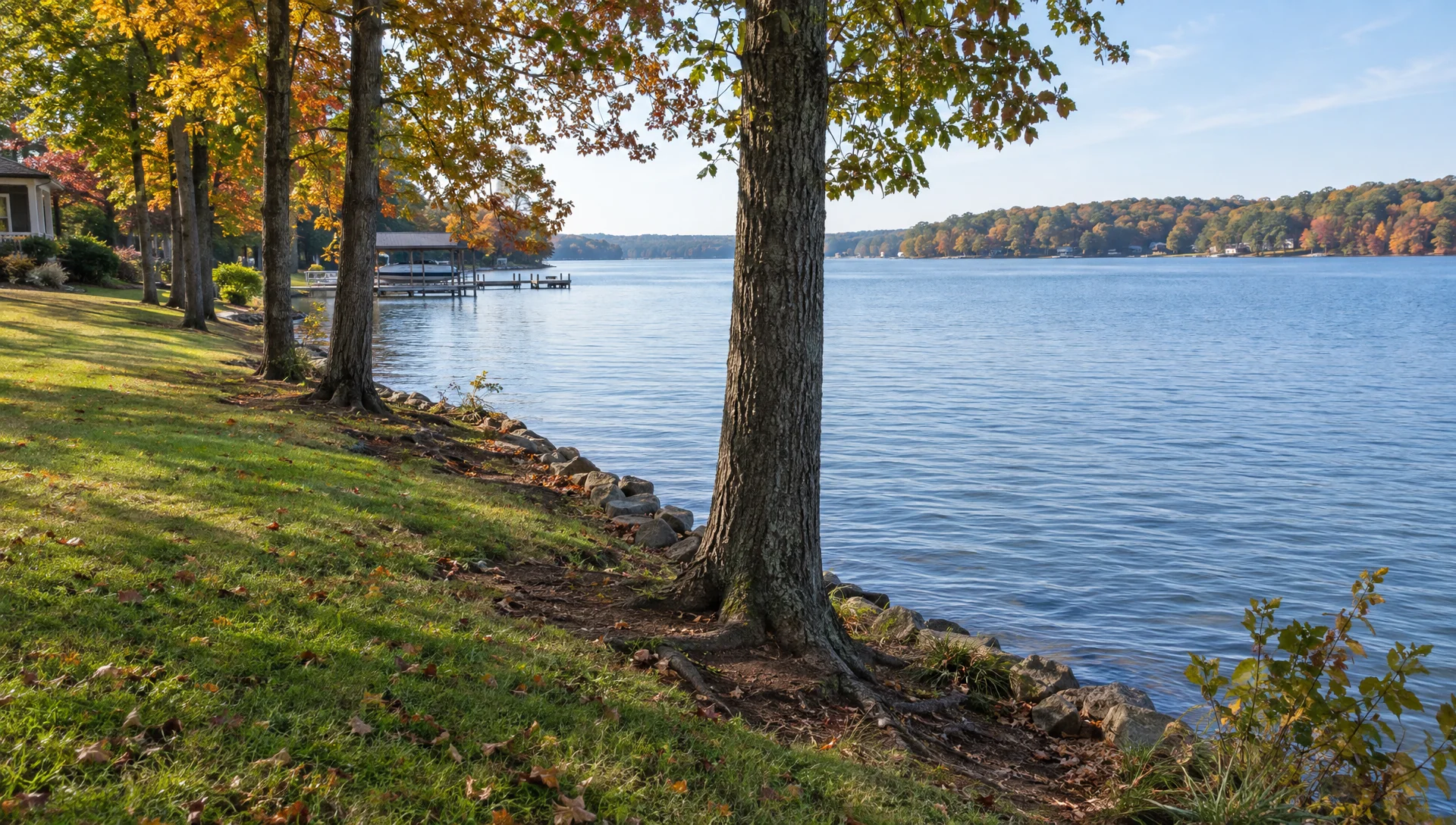
Shoreline erosion on Lake Norman can show up as exposed roots, fresh soil at the water's edge or a bank that keeps getting steeper. At CTC Grading & Hauling, we help property owners in Mooresville, Huntersville, Troutman and Denver work out what shoreline restoration and riprap work their bank needs. Start by looking at where soil is leaving and what the water is doing around it.
Our riprap and shoreline restoration work starts with the bank itself: its slope, the soil, the waterline and how we'll get to it. Stone may be part of the answer, but a pile of rock won't tell you why an edge keeps washing away.
What does shoreline erosion on Lake Norman look like?
Look for changes from how your shoreline used to look. A bare patch on its own doesn't tell you much. Better clues are a new ledge at the bottom of the bank, roots with the soil gone from under them, or a strip of lawn getting narrower toward the water. A bare bank can also lose a little soil again and again without ever caving in.
Existing stone can tell you something too. Gaps, sunken sections and soil washing out through the face are worth a closer look. If stone moves out of place, the bank behind it may be left bare. Take a wide photo of the whole stretch before you get close-ups of individual gaps.
Do it from firm ground. Stay back from overhanging soil, loose edges and undercut roots. You don't need to climb down an unstable bank to get what we need for a first conversation.
Is the water coming from the lake or the yard?
Water can reach the bank from more than one direction. Waves wear at the open face. Rain on the yard can run downhill and collect at one low spot. A downspout or a worn path can change where that runoff goes.
After rain, look from somewhere safe for channels in the soil or small fans of dirt. A narrow washout lined up with a drainage route is a different problem from soil loss along a long stretch of waterfront. You can have both on the same property.
That difference matters when we plan the repair. If the face of the bank is protected but runoff keeps pouring over the top, part of the problem is still there. Tell us about water crossing the lawn as well as what you see along the lake.
How should you record a changing shoreline?
A few clear notes are more useful than trying to diagnose every detail yourself. Pick a steady spot, like a corner of the patio, and photograph the same stretch over time. Keep the date with each picture, and get something fixed in the frame so it's easier to see the edge change.
From a safe distance, photograph anything nearby: the end of a wall, steps, a dock connection or a path down to the water. Mention any recent drainage or landscaping changes. If you know roughly how long the problem stretch is, include that and say it's a rough figure.
The water level changes how much bank you can see. A wider strip of bare bank one day doesn't mean soil disappeared overnight. Comparing dated photos, with the waterline showing, helps you tell changing conditions from new damage.
When does a shoreline need more than added stone?
A stone edge holds up because of the preparation as well as the stone you see. The shape of the bank, the base at the bottom and keeping soil and stone apart all affect how it performs. Where old rock has sunk or the soil behind it has washed out, just covering the gap can hide the real problem.
A wall brings its own questions. Tell us about leaning sections, shifted material and soil loss near a wall separately from a bare bank. We also build retaining walls and seawalls, so tell Chris about both if your shoreline has a change in ground level.
Shoreline restoration, riprap and waterfront walls are the heart of our work at CTC. We're a family-owned business led by Chris. The right plan comes from your property, not a standard fix for every shoreline.
What should you have ready before you call?
Start with your town, the part of the bank that worries you and whether anything has changed lately. Note how equipment could get to the water and whether a dock, wall, fence or narrow side yard is in the way. That helps us talk about the whole job, not just the photo.
Keep what you see separate from what you guess. “The soil under these roots is missing” is useful. You don't have to know the engineering reason before you ask for help.
Questions we hear
Does every bare patch need riprap?
No. We look at a bare patch alongside the slope, how the water moves and the rest of the shoreline before choosing a repair.
Can you look at an existing stone shoreline?
Yes, shoreline restoration and riprap are what we do, and that includes talking through an existing stone edge. Tell Chris where stone has moved or where soil is getting out.
Who should I call about shoreline erosion near Mooresville?
Call Chris at CTC Grading & Hauling at 704-902-1385. Visit our contact page for the next step, and tell us what's changed along your Lake Norman bank.